Some yards make it pretty obvious. Soil slides onto the lawn after every storm, mulch ends up on the walkway, and there’s a slope next to the patio that nobody really knows what to do with. Other times it’s less clear, and you’re left wondering if you actually need a retaining wall or if a little grading would be enough.
Both are fair questions. A retaining wall can solve real problems, but it isn’t the answer for every hill or uneven corner of the yard. It helps to know what a wall actually does before deciding to build one.
You usually need a retaining wall when a slope is moving soil where you don’t want it, when you need flat space that the yard doesn’t have, or when a change in grade is putting pressure on a patio, driveway, or foundation.
In simple terms, a retaining wall holds soil back. That lets you create level areas on a sloped property, keep dirt from washing downhill, and give different parts of the yard a clear edge.
Here are some signs worth paying attention to:
Seeing one of these doesn’t automatically mean you need a wall. But if two or three of them sound familiar, it’s worth having someone look at the property.
A wall is great at holding soil and creating levels. It isn’t a fix for everything, though.
| What you’re seeing | What may help |
|---|---|
| Soil washing onto the lawn | A low wall, grading, or new plantings |
| No flat space for a patio | A retaining wall to create a level area |
| Water pooling at the bottom of a slope | Drainage work, sometimes combined with a wall |
| A steep path that feels unsafe | Steps, often with walls on each side |
| An old wall leaning or cracking | Repair or rebuild, depending on the cause |
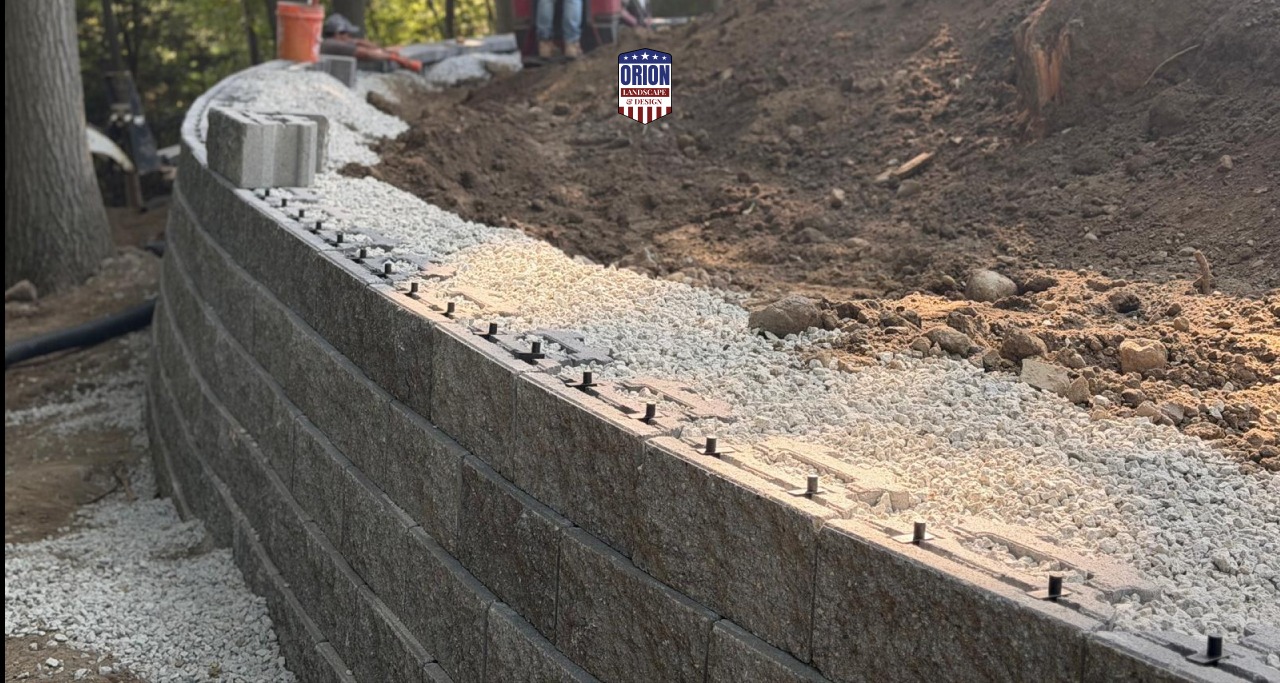
Water is the part people tend to underestimate. Soil behind a wall gets heavy when it’s wet, and if the water has nowhere to go, it pushes against the wall. That’s one of the most common reasons walls lean or fail over time. A good wall is built with drainage behind it, a solid base, and the right materials for its height.
Height also changes the conversation. A short garden wall is a very different project from a tall wall holding back a steep grade. Taller walls may need engineering and a permit, so it’s a good idea to check with your town before planning anything big.
If your property has a bigger slope, our article on how to make a sloped backyard more functional walks through other options like terracing, steps, and walkways.
Once you know a wall makes sense, the fun part starts. A retaining wall doesn’t have to look like something added only because it was necessary.
Natural stone works well in yards with lots of plantings and a more relaxed feel. Block walls give you cleaner lines and a more uniform look, and they come in different colors and textures. A wall can also double as extra seating around a patio or fire pit, which is one of the easiest ways to make it feel like part of the design.
Look at what’s already around it, too. The wall should feel comfortable next to your house, your steps, and your patio, not like it came from a different project.
Steps are worth thinking about at the same time. If people will walk from one level to the other, building steps into the wall from the start looks much cleaner than adding them later, and it keeps everyone from cutting across the slope.
At Orion Hardscape, we design and install retaining walls for homeowners across Massachusetts. Before we talk about stone or block, we look at the slope, the soil, where water goes, and how you want to use the space. Sometimes a wall is the right call. Sometimes a smaller change does the job just as well.
If you’re still trying to figure out whether you need a retaining wall, contact Orion Hardscape and tell us what’s happening in your yard. We’ll help you find the best way to deal with the slope and turn it into space you’ll actually use.
It depends on the height of the wall and your town’s rules. Taller walls often need a permit and an engineered design, so check with your local building department before you start.
The most common reasons are water building up behind the wall, a weak base, or a wall that isn’t built for the height and weight of soil it’s holding back.
Natural stone and block walls are both popular. Stone has a more natural look, while block gives cleaner lines and a more uniform style. The right choice depends on the height, the look you want, and your budget.
A wall built with proper drainage, a solid base, and the right materials can last for many years. Walls without drainage tend to have problems much sooner.