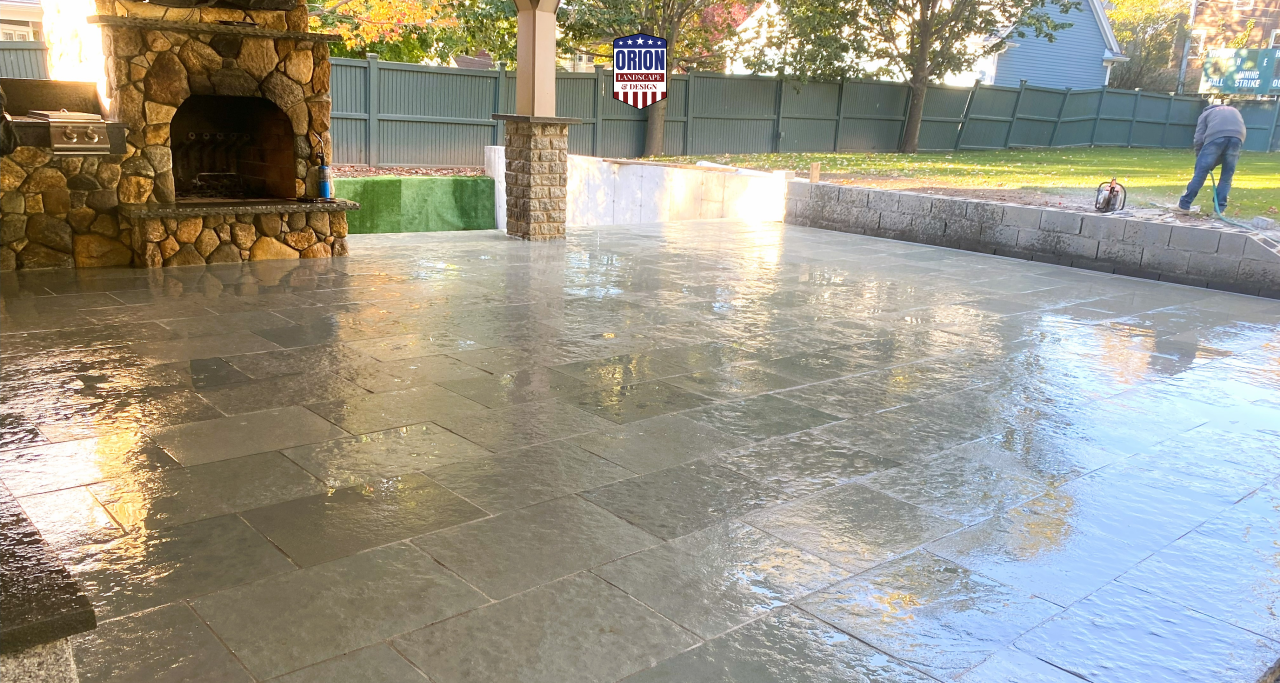
New pavers look amazing. The colors are rich, the joints are tight and everything looks crisp. Then a few seasons go by, and you start to notice faded spots, a grease stain by the grill and weeds sneaking up between the stones. Paver sealing is one of the simplest ways to keep a patio, walkway or driveway looking closer to the day it was installed.
It’s not a must for every project, but for a lot of homes in New England, it’s a smart way to protect the investment.
Most paver sealing jobs need to be redone every few years, often somewhere in the three to five year range. The exact timing depends on the sealer you use, how much traffic the surface gets and how much sun, snow and salt it deals with.
Here’s an easy way to check. Pour a little water on the pavers. If it beads up, the sealer is still doing its job. If it soaks in and darkens the stone right away, it’s probably time to reseal.
A driveway that sees cars every day will usually wear faster than a backyard patio. Think of it like sunscreen. It protects you, but it fades over time, and some days you need to reapply sooner than others.
New pavers are a special case. Some manufacturers recommend waiting a while after installation before sealing, so any white, chalky residue (called efflorescence) has time to come out of the stone first. Sealing too early can trap that haze under the surface. It’s always best to follow the paver manufacturer’s guidance or ask your installer.
Prep is the other half of the job. Paver sealing on a dirty surface just locks the dirt in, so the pavers should be cleaned, stains treated and joints refilled before any sealer goes down.
Sealing does more than make pavers shine. Here are the main benefits:
Not all sealers look or work the same. Here’s a quick comparison:
| Film-forming sealer | Penetrating sealer | |
|---|---|---|
| Finish | Wet look or gloss | Natural, matte look |
| How it works | Creates a protective layer on top | Soaks into the paver |
| Color boost | Strong | Subtle |
| Slip resistance | Can be slicker when wet unless an anti-slip additive is used | Keeps the paver’s natural texture |
| Best for | Patios where color is the priority | Driveways, pool decks and walkways |
Timing matters too. Sealer needs dry weather and temperatures above the manufacturer’s minimum, so in Massachusetts the work is usually done from late spring to early fall. That makes the colder months a great time to plan, so you’re on the schedule early once the weather warms up.
Orion Hardscape installs and maintains patios, walkways and driveways across Massachusetts. Before sealing, our team cleans the pavers, replaces joint sand where needed and makes sure the surface is ready, because sealer only works as well as the prep underneath it. We’ll also help you pick the finish that fits how you use the space.
Thinking about paver sealing for your patio or driveway next season? Contact Orion Hardscape to get on the schedule and keep your pavers looking their best.
For many homes, yes. Sealing can enhance color, protect against stains and help keep joint sand in place. It’s especially helpful on patios, driveways and areas near grills or pools.
Glossy, film-forming sealers can feel slicker when wet. Anti-slip additives or a penetrating sealer can help keep good traction.
It helps. Sealer locks the joint sand together, which makes it harder for weeds to grow, but it won’t stop every weed.
Usually from late spring to early fall, when the weather is dry and temperatures stay above the sealer’s minimum. Cold or wet days can keep the sealer from curing properly.