The first real snow of the year always brings the same routine. Shovels come out, a bag of ice melt gets opened, and the patio that looked great in July suddenly has to get through months of cold, slush, and freezing nights. If you want to protect your patio in winter, most of the work is pretty simple, and a lot of it happens before the first storm even shows up.
The goal isn’t to wrap your backyard in plastic until April. It’s to avoid the small habits that cause trouble later, like using the wrong ice melt, scraping the same edge with a metal shovel all season, or letting water freeze in the same low spot over and over.
Most patio damage from winter doesn’t happen in one storm. It builds up slowly, one freeze at a time.
The easiest way to protect your patio in winter is to keep water from sitting on it, clear snow gently, and be careful with ice melt. Those three things cover most of the damage homeowners find when spring comes around.
Water is the main issue. When it gets into small gaps and freezes, it expands. Repeat that dozens of times between November and March, and loose joints, uneven pavers, or small chips on the surface can start to show up.
So before winter really settles in, take a quick walk around the patio. Sweep off leaves and dirt, since wet leaves hold moisture against the surface for weeks. Look for spots where water collected during fall rains. And check the joints between the pavers. If the sand has washed out in some areas, it’s better to deal with that now than to wait until spring.
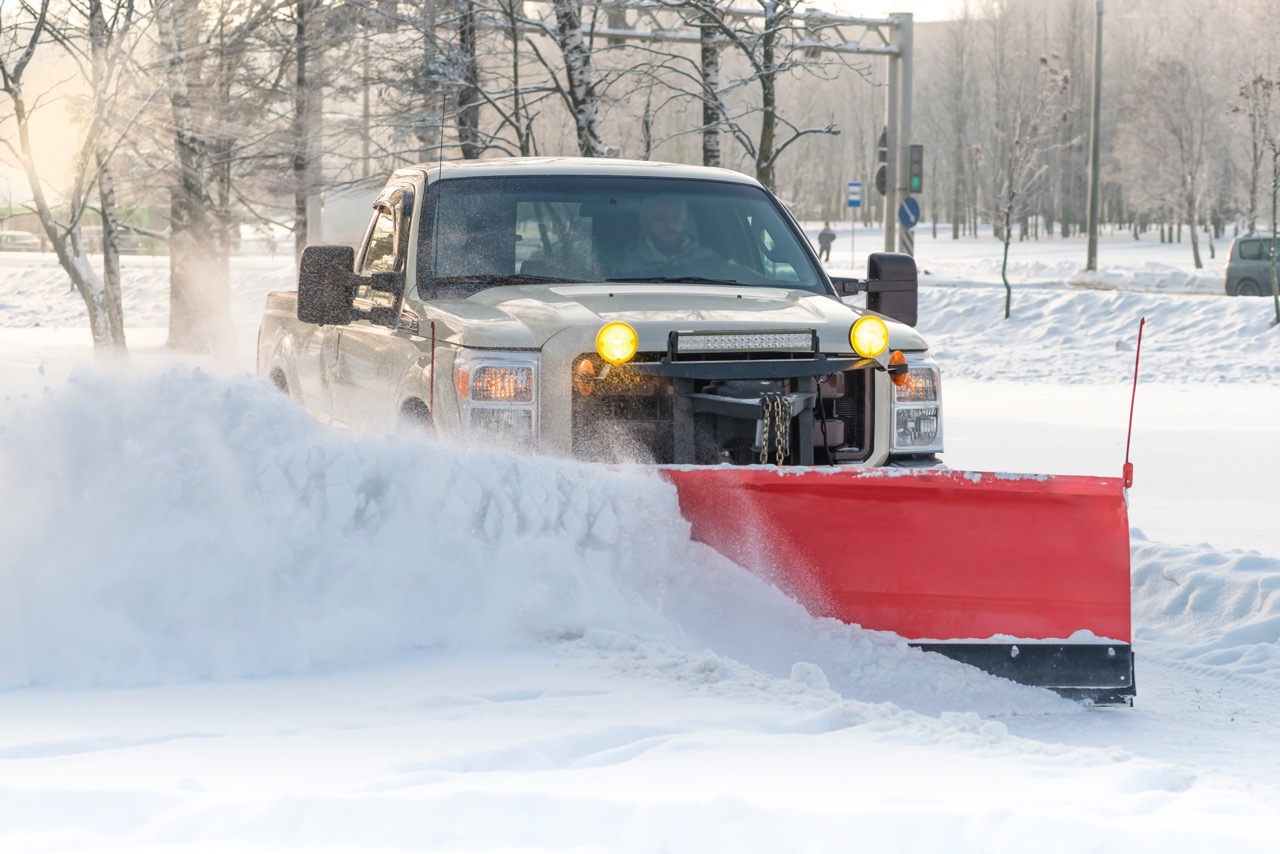
Snow itself rarely hurts a well-built patio. What we do to get rid of it is usually the bigger problem.
A few habits make a real difference:
Snowblowers can work on pavers too. Just raise the skid shoes a little so the blade isn’t grinding against the surface every time you clear it.
Spring tells you how the patio handled the winter. Once the snow is gone, walk across it and pay attention to how it feels under your feet.
Here’s what homeowners commonly notice after a long winter:
| What you notice | What it may mean |
|---|---|
| A paver lifted or sank | The base underneath moved during freeze and thaw |
| A new puddle | The grade changed slightly or an area settled |
| Joint sand is missing | It washed out and needs to be refilled |
| White residue on the surface | Leftover ice melt or natural salts coming to the surface |
| Chipped edges | Shovel, plow, or snowblower damage |
Small changes aren’t a reason to panic. A paver that settled a little can usually be lifted and reset. But if the same area moves every single year, something may be going on with the base or the drainage underneath it.
That’s why the work you can’t see matters so much. Base preparation, compaction, and grading all affect how a patio holds up through freeze and thaw. We go into more detail on this in our guide to planning a hardscape design that lasts for years.
At Orion Hardscape, we work with homeowners across Massachusetts who want their patios and walkways to look good for more than one season. Sometimes that means fixing a low spot before winter. Other times it means resetting a few pavers in the spring or improving drainage so the same problem doesn’t come back next year.
We also offer snow services, so we see firsthand what a New England winter does to outdoor surfaces.
If you want to protect your patio in winter and aren’t sure what your space needs, contact Orion Hardscape and tell us what you’ve been noticing. We’ll take a look and help you get your patio ready for the cold months ahead.
Many concrete pavers can handle common de-icers when they’re used lightly. Heavy use leaves residue and can wear the surface over time, so follow the manufacturer’s guidance and avoid ammonium-based products.
Yes. Raise the skid shoes slightly so the blade doesn’t scrape the surface or catch the edges of the pavers.
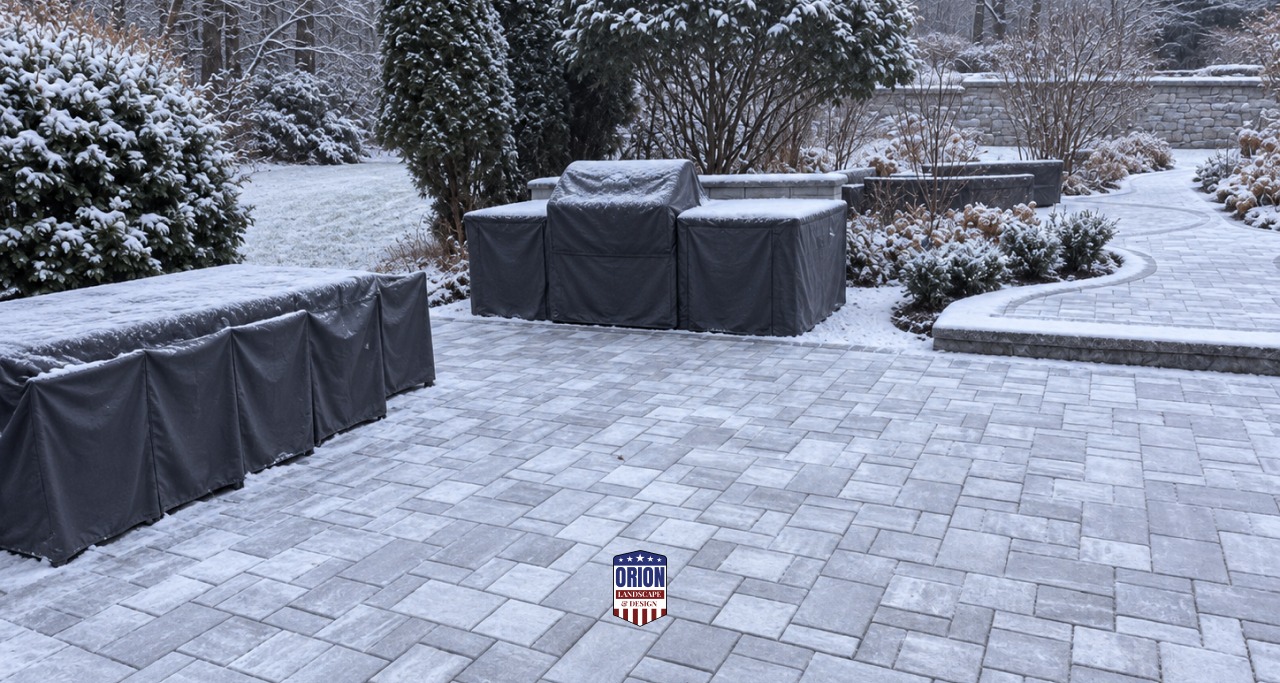
It helps. Moving or covering furniture protects it, and getting heavy pieces off the surface keeps moisture from getting trapped underneath all season.
Spring is usually a good time, once the ground has thawed and dried out. Fixing a small area early keeps the problem from spreading.