It’s pretty easy to describe what walkways do: they have to get you from one place to another comfortably.
But anyone who's had to walk across wet grass to get to the backyard or navigate an uneven path knows how much difference a good one can make.
It is natural that choosing walkway materials is generally based on appearance first. You want something that looks good beside your house.
But looks are only a part of the equation. A front path that is used many times a day has different needs than a garden walkway. Choosing materials requires thought, considering snow, rain, drainage, maintenance and what the path connects to.
The best materials for walkways are those that make sense for the location and the frequency of use of the path.
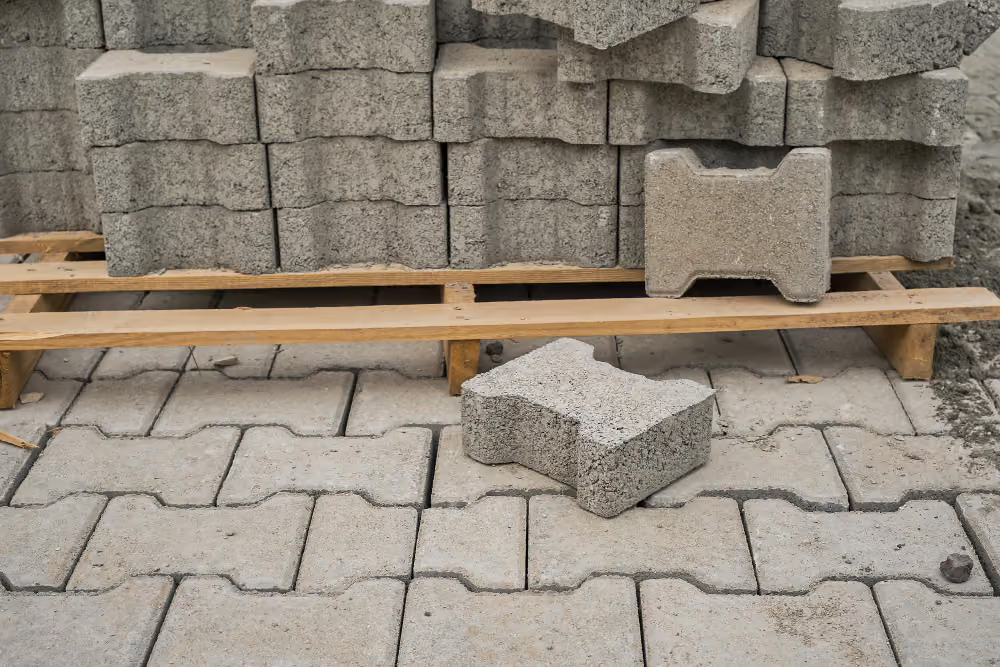
Pavers are a popular choice for walkways in the front and backyard, as they are a solid surface and come in a variety of styles. Natural stone is a good option for more variation, while gravel is a good choice for a more casual garden path.
For a front entrance, comfort and stability tend to matter more. This is a path you’ll use when it’s raining, when there’s snow on the ground, when you’re carrying bags in from the car, and when guests are coming to the house.
A path through a garden doesn’t necessarily have to do the same job. It may only be used occasionally, and something less formal can look better surrounded by plants.
There’s also the rest of the property to consider. If you already have a paver driveway, stone steps, or a patio nearby, take a look at those before choosing something new.
Matching everything isn’t necessary, but the materials should look comfortable next to each other.
If you’ve started looking at walkway ideas online, you’ve probably seen all three. Each has its place.
Pavers are a good choice when you want a clean, defined path. There are enough shapes, sizes, and textures available that they don’t all end up looking the same. They can also be arranged with borders or different patterns if you want a little more detail.
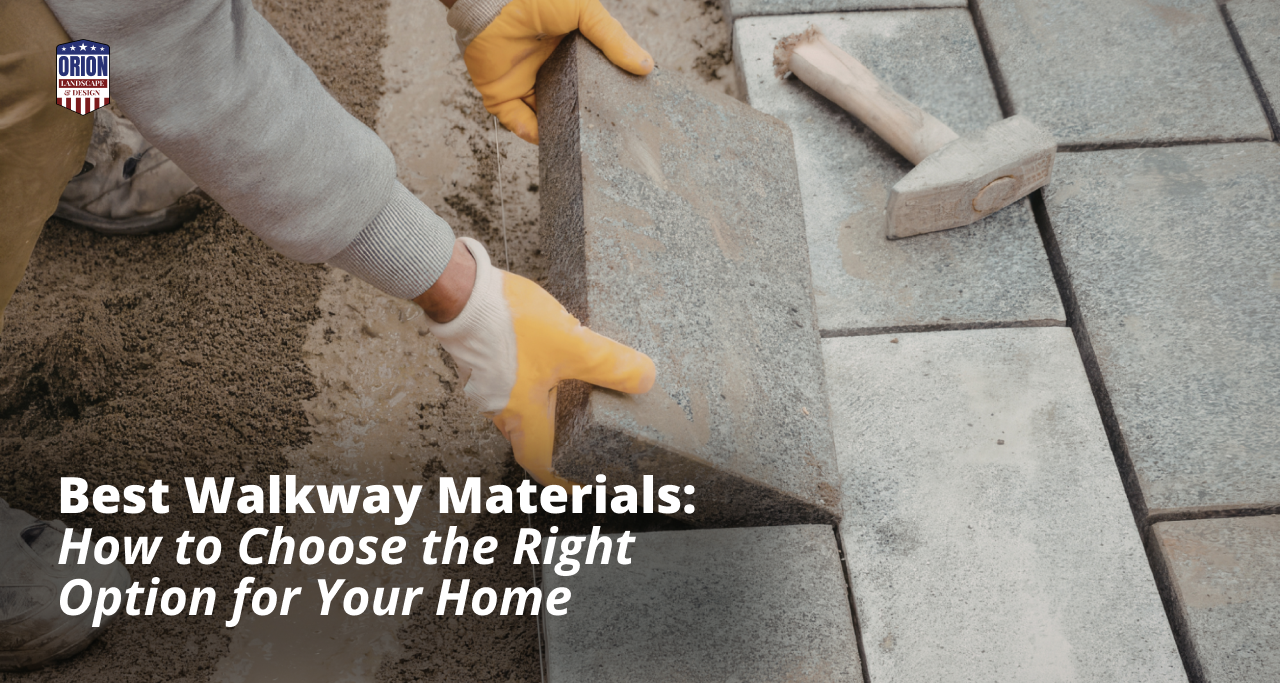
One practical advantage is what happens when a small area needs attention later. Because the walkway is made from individual pieces, pavers can be removed and reset rather than treating the entire path as one surface.
Natural stone feels different. No two pieces are exactly alike, and that variation is part of the look. It can be especially nice in a backyard where you want the walkway to feel connected to the landscaping rather than overly polished.
Then there’s gravel. It’s simple and works well in the right setting, particularly for an informal garden path. The tradeoff is that it’s loose material, so expect a little more upkeep than you would with a solid walking surface.
For more ideas on how different materials can be used outdoors, take a look at Orion’s guide to sustainable hardscaping in Massachusetts.
This sounds almost too simple, but it’s useful: walk the exact route where you’re thinking about putting the path.
You might realize that the straight line you pictured isn’t actually the way people naturally move through the yard.
Maybe everyone cuts toward the driveway. Maybe a tree, garden bed, or change in elevation makes a slight curve more comfortable. Or maybe the path needs to connect with existing steps in a way you hadn’t considered.
Pay attention after it rains, too. If there’s already a wet spot or water running through that area, putting a new walkway over it doesn’t make the problem disappear.
Then think about width. A narrow garden path can be perfectly comfortable for one person.
The walkway to your front door is another story. If two people regularly use it together, or you’re carrying groceries from the driveway, a little extra room can make a noticeable difference.
And finally, there’s what’s underneath the finished walkway. The nicest paver in the catalog won’t make up for poor base preparation.
A properly prepared base, grading, and attention to drainage are what help the finished path stay comfortable and even over time.
That matters even more here in Massachusetts, where the ground and outdoor surfaces go through freezing temperatures, snow, rain, and seasonal changes year after year.
Sometimes homeowners come to Orion Hardscape already knowing exactly which paver or stone they want. Other times, they know something about the current walkway isn’t working but haven’t gotten much further than that.
Both are perfectly normal starting points.
We can look at what’s already there, where you need the path to go, how you use that part of the property, and what the walkway will connect to. From there, it becomes much easier to narrow down the materials and layout.
A front walkway may need to work with existing steps and the style of the house. A backyard path may need to connect a patio to another area without cutting awkwardly through the landscaping.
In some yards, drainage or elevation needs to be figured out before the material is even the main question.
If you’re comparing walkway materials and aren’t sure what would work best around your home, contact us. Tell us what you want the path to connect and what you like, or don’t like, about the space now. We can take it from there.