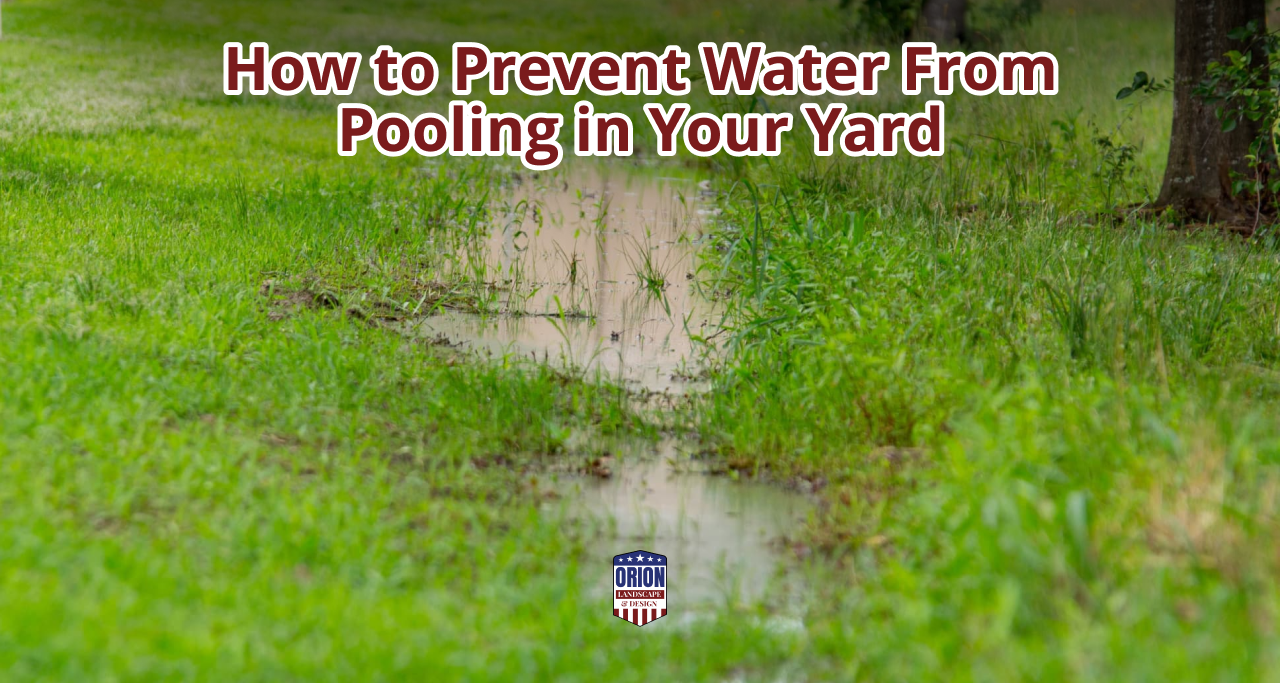
You know the spot. It rains, the rest of the lawn starts drying out, and one area still looks like a small pond. Sometimes it’s gone by the next morning. Other times, you’re stepping around mud for days.
When water pooling in yard areas keeps happening in the same place, it’s usually worth figuring out why instead of waiting for the next sunny day to dry everything out.
The puddle itself isn’t always the whole problem, either. Before settling there, it may be water flowing in from somewhere else on the property. It could be a low spot, a compacted soil, the direction of the slope, or runoff from nearby hardscape.
It’s far easier to decide what, if anything, needs to change when you first discover the cause.
Pool Of Water In Yard Water collects in yard areas when rain water flows to a spot faster than it can drain or be diverted. Low areas and grading problems are common reasons, but soil conditions, runoff and nearby patios or walkways can also have an effect on where the water ends up.
A good rain is one of the easiest ways to learn more about the problem. Look past the puddle.
Is water running down a slope toward it? Does runoff come off a patio or walkway? Is the wet area noticeably lower than the lawn around it? Does the ground stay soft there long after other areas have dried?
How long the water remains is useful information, too. A puddle that disappears fairly quickly after unusually heavy rain is different from a section of lawn that stays soggy for several days after an ordinary storm.
And if the same spot is wet over and over again, even when the rest of the yard is fine, that’s a pretty good sign that something about that particular area deserves a closer look.
It’s tempting to focus entirely on the wet patch. That’s what you can see, after all. But the water had to come from somewhere.
Walk uphill from the problem area and look at what’s around it. The source may be several feet away.
A few things are worth checking:
This is also why copying a drainage fix you saw online isn’t always a great idea. Two yards can have puddles that look almost identical and still have completely different causes.
Every property is different, and drainage problems make more sense when you look at the yard as a whole.
We talk more about designing around the specific characteristics of a property in Landscape Design: Tailoring Your Outdoor Space to Your Needs.
Once you understand where the water is coming from, you can start thinking about what needs to change.
Sometimes grading is part of the answer. If the shape of the ground keeps directing runoff into the same low spot, adjusting that area may help water move in a better direction.
Other properties may need a drainage solution that collects or redirects excess water. French drains and dry wells are examples you may come across when researching the subject, but neither should be treated as an automatic answer to every wet lawn. The right approach depends on the property and the source of the water.
Existing hardscape matters here as well. If water is collecting beside a patio, walkway, or retaining wall, you need to understand how that surface fits into the drainage pattern before making changes.
In some cases, the answer may be relatively simple. In others, several parts of the property are contributing to the problem.
That’s why starting with a specific product or drainage system can put the process backward. First figure out what the water is doing. Then choose the solution.
A rainy afternoon doesn’t automatically mean your yard needs drainage work. But if you know exactly where the puddle will be before the rain even starts, that’s different.
We start by looking at what’s happening on the property. That includes the grade, lawn, landscape beds, existing patios and walkways, walls, and the areas where water tends to collect.
From there, the team can discuss whether grading, drainage work, or another approach makes sense for that particular yard.
That matters because fixing one wet area shouldn’t simply send the same water somewhere else. The goal is to understand how the different parts of the property work together and address the actual source of the problem.
If water pooling in yard areas has become a familiar sight every time it rains, contact Orion Hardscape and tell us what you’ve been noticing. Where the water appears, how long it stays, and what happens after a storm are all good places to start.