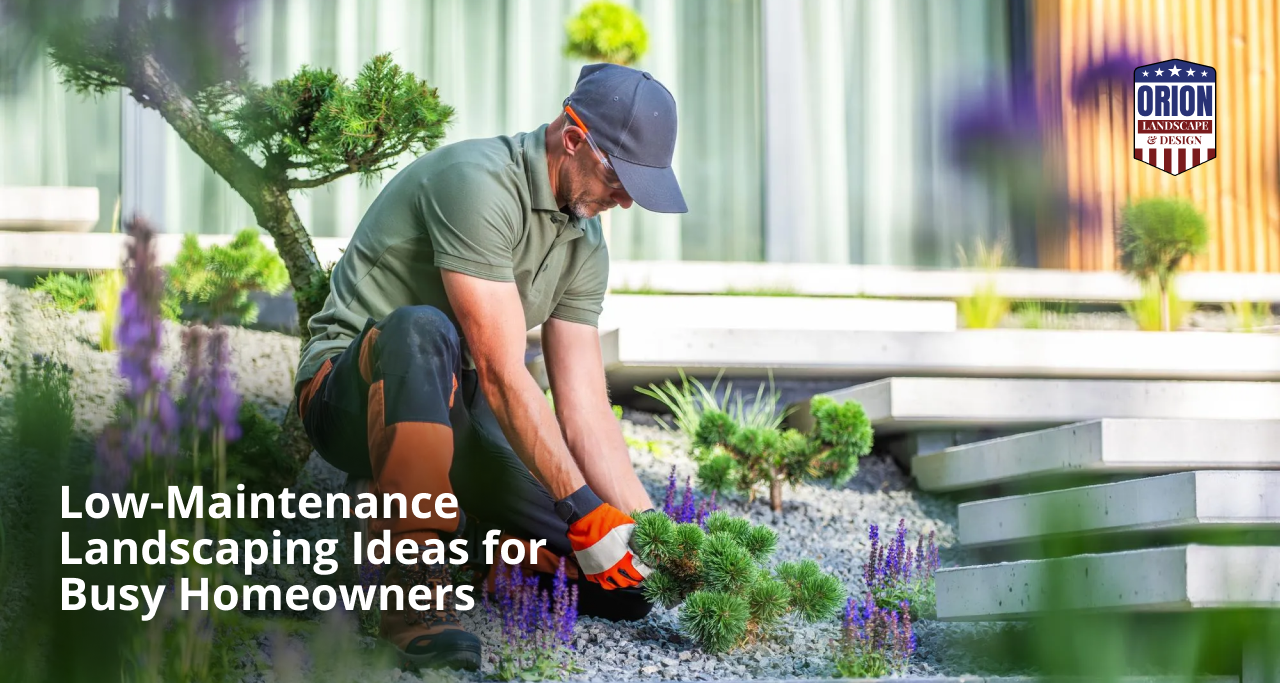
You want a yard that looks good, but you don't want to spend every Saturday weeding and watering. That's a common wish for busy families. Low maintenance landscaping gives you a clean, attractive yard with much less work, so you can spend your free time enjoying it instead of caring for it.
Low maintenance landscaping means choosing plants, materials and layouts that need little watering, trimming or weeding. It usually combines hardy native plants, thick mulch, clean edging and smaller lawn areas so the yard stays neat with only a few hours of care each season.
The idea isn't to remove everything green. It's to make smart choices so the yard mostly takes care of itself.
Start by deciding how much time you actually want to spend on the yard each month. That number guides every choice. If it's very little, lean on hardscape, shrubs and ground covers. If you enjoy a bit of gardening, keep one small bed for seasonal flowers and make the rest easy care.
The right plants do a lot of the work for you. Here's a quick guide.
| Plant Type | Why It's Low Maintenance | Examples |
|---|---|---|
| Native perennials | Adapted to local soil and winters | Coneflower, black-eyed Susan, bee balm |
| Ornamental grasses | Little trimming, look good year-round | Switchgrass, little bluestem |
| Evergreen shrubs | Structure all year, slow growth | Inkberry holly, dwarf conifers |
| Ground covers | Fill space and block weeds | Creeping phlox, sedum |
| Flowering shrubs | Color without yearly replanting | Hydrangea, summersweet |
Choose plants for their full-grown size. A shrub that fits now but doubles in two years means constant trimming.
How you arrange the yard matters as much as what you plant. A few layout ideas make upkeep much easier:
Hardscape helps too. A patio, walkway or gravel area replaces lawn that would otherwise need mowing and watering every week.
For plant ideas that thrive here with little help, see our post on native plants for Massachusetts yards.
A little planning each season keeps things easy. A quick spring cleanup, one round of mulch and a fall trim are often all a well-planned yard needs. That's a big difference from weekly weeding and watering.
Think about the tools and access you'll need, too. Beds that are too deep to reach, lawn strips too narrow for a mower and slopes that are hard to walk all add work. A well-planned layout with reachable beds, wide paths and gentle grades makes every chore quicker.
Orion Hardscape designs and installs planting beds, mulch, edging, patios and walkways for homeowners across Massachusetts. We plan your yard around how much time you want to spend on it, so it looks great without becoming a second job.
If you're ready for low maintenance landscaping that still looks beautiful, contact Orion Hardscape and let's design a yard that works for you.
Native plants, mulched beds, a smaller lawn and some hardscape are among the easiest combinations to care for.
A few inches is usually enough to block weeds and hold moisture. Keep it away from stems and trunks.
Yes. They're adapted to local weather and soil, so they usually need less water and care once established.
Yes. Keep the lawn smaller and simple in shape, and surround it with beds and hardscape.
It does. A solid edge stops grass from creeping into beds and keeps the yard looking neat.